Program Optimization
Identify improvements across circuit fragments constructed from any instruction set.
Generalized circuit optimization

Conventional optimization constraints
Conventional optimization methods depend on manually applied mathematical identities, such as the Euler decomposition, which exploit the underlying group structure of quantum gates. As a result, these approaches do not generalize well across different circuits or instruction sets.

Instruction-set-independent optimization
Triple Alpha’s compiler allows developers to optimize code according to their preferred metrics—such as circuit depth, qubit count, or gate fidelity—balancing performance and hardware constraints. It automatically discovers optimization opportunities across circuit fragments, enabling instruction-set-free optimization that generalizes across hardware platforms.
Resource efficiency
Quantum systems are inherently noisy, making circuit optimization crucial for reducing errors and improving computational accuracy. By minimizing gate count and circuit depth and adapting to hardware constraints, Triple Alpha’s compiler enhances fidelity and ensures efficient use of limited resources.

True customization
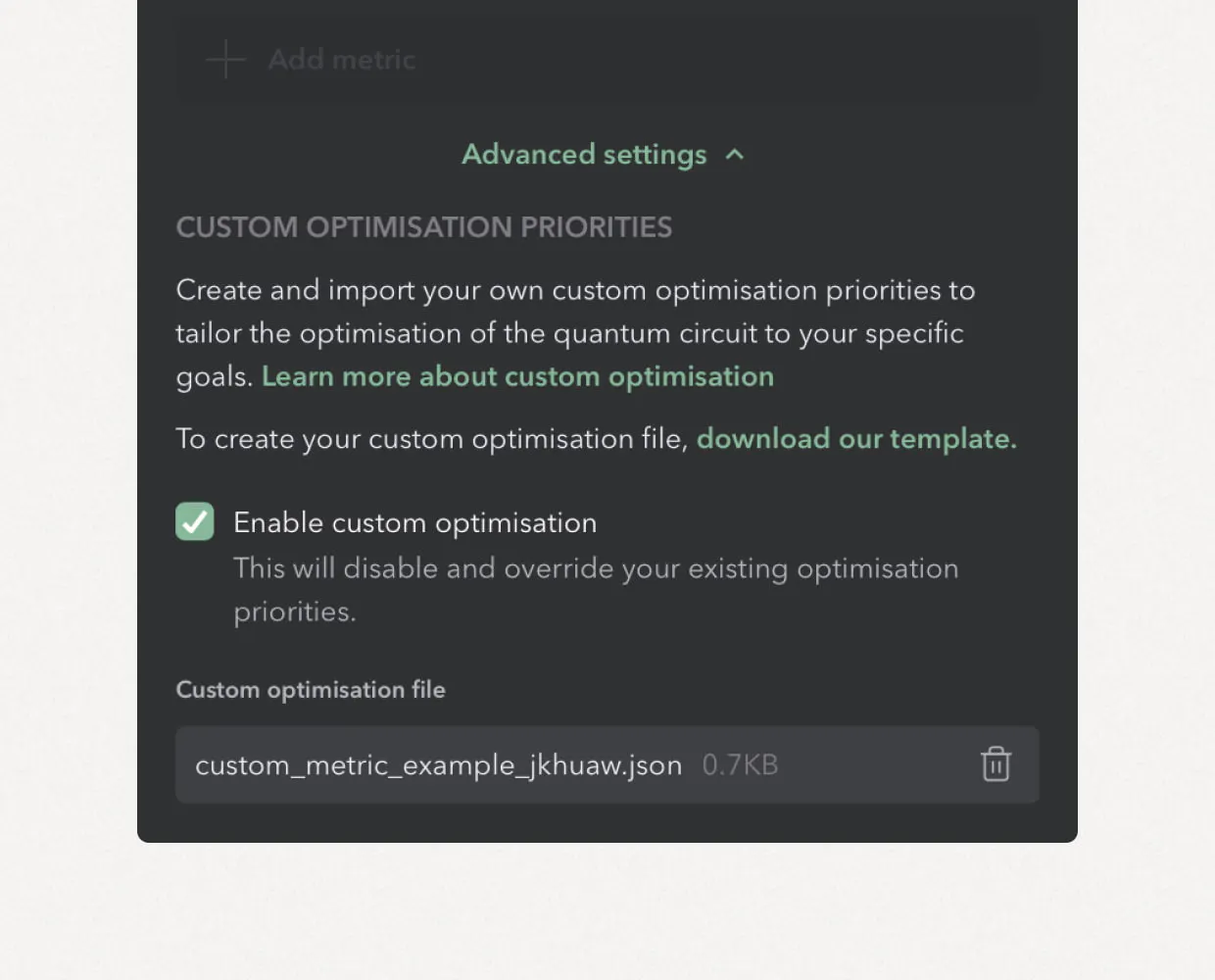
Triple Alpha’s optimization engine supports customized, user-defined metrics, giving developers the freedom to tailor programs to their specific needs—whether focused on speed, fidelity, or memory usage.
Non-unitary optimization
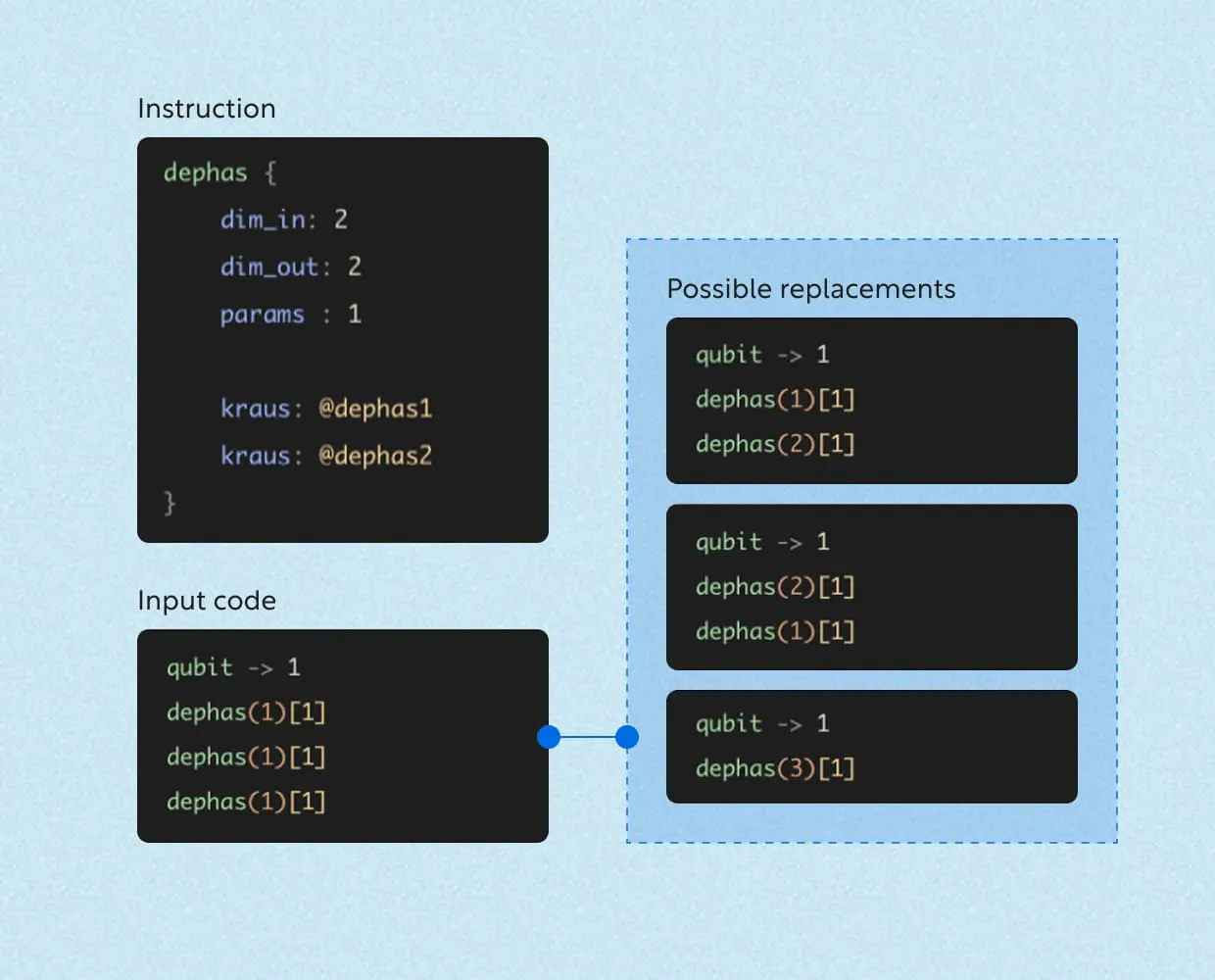
Beyond traditional unitary circuits, Triple Alpha’s compiler can identify simplifications within non-unitary operations such as dephasing and amplitude damping, widening the scope of resource-efficient quantum circuits deployable on a variety of hardware systems.