Running Complex, Adaptive Quantum Programs
Horizon Quantum’s execution infrastructure is designed to run complex programs with general control flow.

Quantum computing beyond circuits

The limits of static circuit execution
Today, most quantum programs are limited to static circuits, and most quantum hardware lacks support for general control flow. Without runtime support for loops, recursion, and classical computation alongside quantum operations, developers can’t express adaptive quantum programs capable of responding to intermediate results, making many quantum processing tasks difficult to implement efficiently.

The freedom of general control flow
Horizon’s execution infrastructure allows for general control flow, which is executed in one of two ways depending on the target system. When the hardware supports direct execution, our infrastructure executes the program using the logic of the control system. When the hardware only supports circuits, our execution infrastructure implements the same program by stitching together multiple runs, emulating a system capable of general control flow.


Quantum programs capable of control flow and classical logic
Depending on the system a Triple Alpha user targets, our execution infrastructure implements control flow through one of two methods.
1. Producing control systems code with control flow
Our execution infrastructure abstracts the control system, so developers can compile higher-level programs into control-system code with control-flow logic. This capability eliminates the need to write code specific to any one system. Because our infrastructure automatically generates the necessary control instructions for individual devices, a single Hydrogen program can target multiple quantum computers.

2. Extending hardware capabilities with a hybrid approach
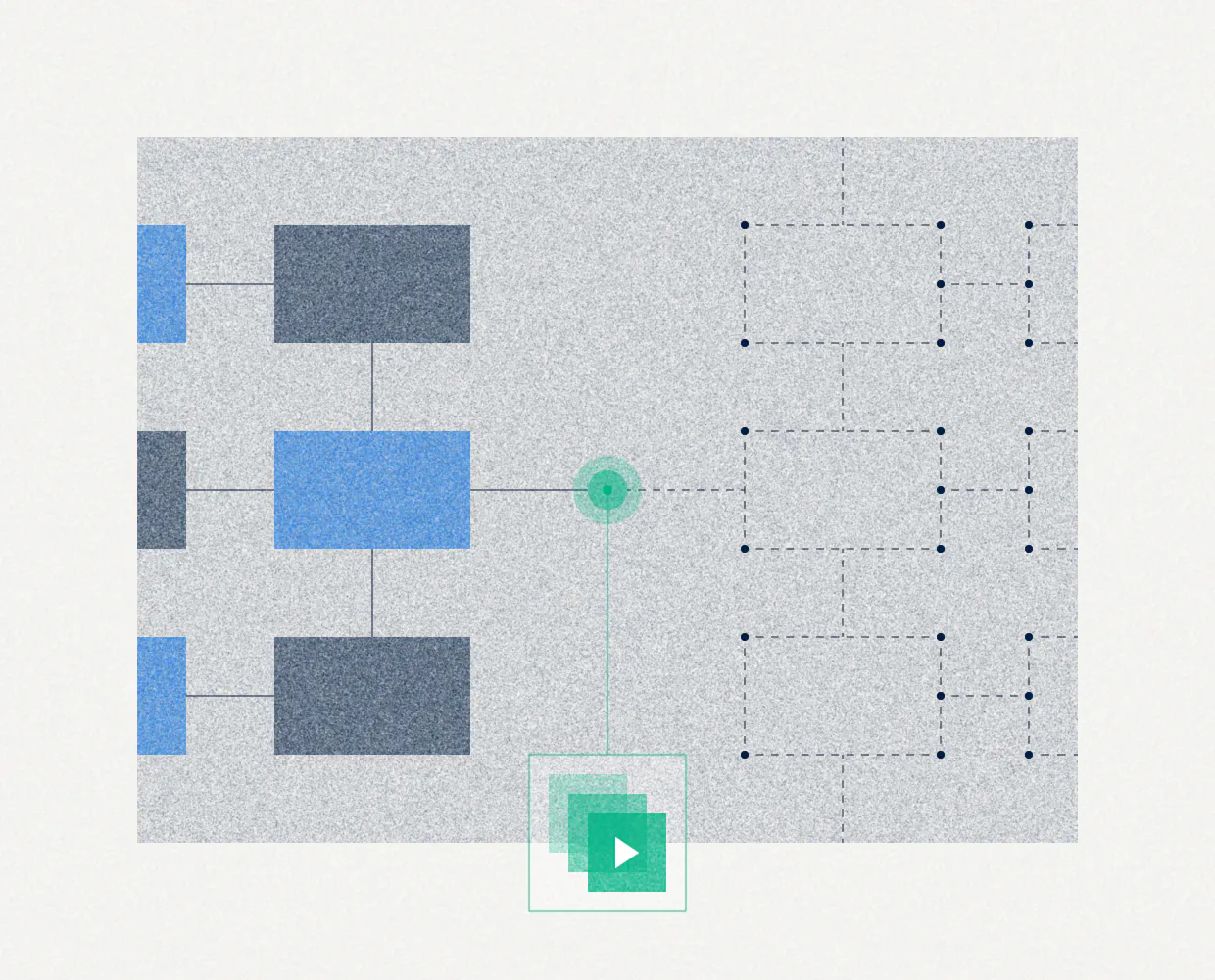
Hydrogen expresses control flow through blocks, each of which contains a list of instructions. When a program reaches a branch point, the execution infrastructure uses multiple runs to obtain the information it needs to proceed—such as a measurement result, a classical computation, or a user input—during execution. Through this hybrid classical–quantum approach, our execution infrastructure emulates a more advanced quantum system capable of general control flow, extending the capabilities of current hardware that lacks native support.
Adaptive and expressive quantum programs
With its ability to move beyond static circuits, our execution infrastructure supports advanced capabilities, enabling genuinely dynamic quantum programs.

Take mid-circuit measurements
Mid-circuit measurement lets the program measure qubits while a computation is still running and then immediately use those results to influence subsequent operations. This feedback is essential for quantum error correction and adaptive protocols that depend on measurement outcomes during execution.

Perform mid-computation classical functions
Within our execution infrastructure, classical functions can be evaluated on measurement results during program execution. The quantum program pauses, passes the data to the classical function, receives the computed result, and continues execution—allowing quantum programs to harness classical computation while maintaining their quantum state.

Use hybrid quantum-classical computation
By triggering classical functions directly from quantum measurements, our execution infrastructure enables hybrid quantum–classical computation within a single continuous runtime.

Receive mid-computation input/output
Mid-computation I/O extends this interactivity to the network layer. Programs can communicate with external systems—sending intermediate results, requesting input, and pausing until a response is received—all while the program is running. This capability transforms quantum execution from a static, batch-style process into a live feedback loop where new data influences ongoing computation and enables adaptive applications.
Towards a quantum operating system
The technical progress across our development, deployment, and execution infrastructure represents the first steps toward a true quantum operating system (OS)—the software that bridges the gap between QPU hardware resources and user applications, much like how a classical OS manages CPU cores, memory, storage, and I/O for classical applications.
With its advanced capabilities, our runtime is evolving into a quantum operating system kernel for quantum hardware, designed to manage processes, memory, and device resources dynamically and support increasingly complex quantum algorithms and applications.