The Software Infrastructure to Power Tomorrow's Computers
Bridging the gap between today’s quantum hardware and tomorrow’s applications.

Other quantum programming tools
Quantum programming ranges from control-systems programming that specifies physical operations to higher-level tools that generate logical quantum circuits automatically. Each approach makes a trade-off between flexibility and portability: the closer developers get to the hardware, the more flexibility they gain, but the less portable their code becomes.
Horizon Quantum takes a different approach
Our software infrastructure provides both precise pulse-level control and advanced control flow while maintaining broad portability across supported systems. Developers gain fine-grained access to hardware behavior and the freedom to deploy their code anywhere, without sacrificing performance.
What makes our technology different?
By focusing on algorithm design, hardware abstraction, and programming abstraction, we’re designing our software infrastructure to overcome the three factors limiting quantum software development: the small talent pool for algorithm construction, the fragmented hardware landscape, and the lack of sophisticated programming tools.
Algorithm design
Rather than rely on the two most common methods for quantum algorithm development used today—manual construction from mathematical structures and tuning the parameters of quantum circuits—we treat quantum algorithm construction as a compilation problem.
Instead of building individual algorithms for specific tasks, we’re developing techniques to enable the automatic generation of quantum algorithms from code written for conventional computers. This approach aims to eliminate the need to handcraft a new quantum algorithm for each problem and to make quantum acceleration broadly applicable wherever a classical program can be written.
Algorithm design
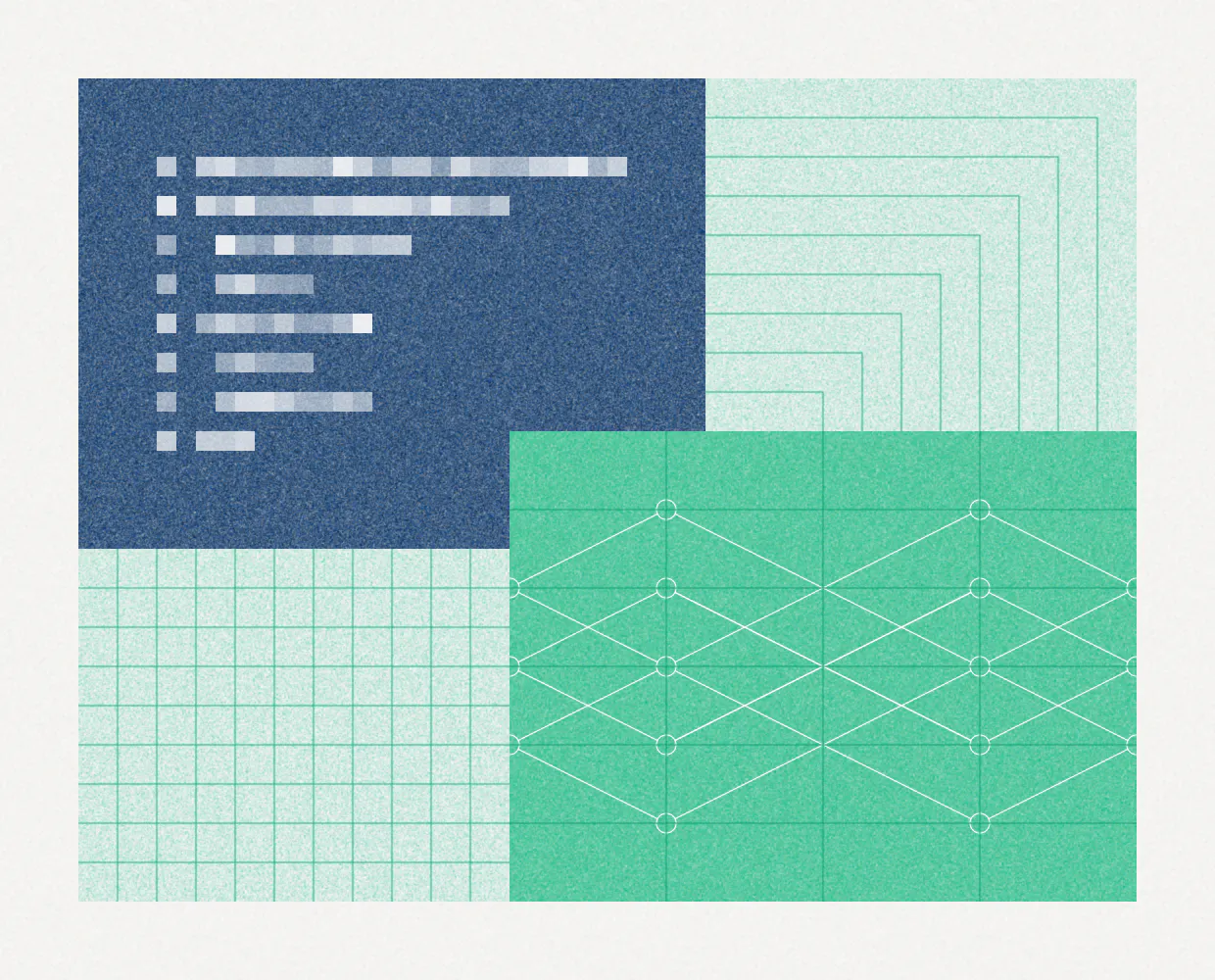
Rather than rely on the two most common methods for quantum algorithm development used today—manual construction from mathematical structures and tuning the parameters of quantum circuits—we treat quantum algorithm construction as a compilation problem.
Instead of building individual algorithms for specific tasks, we’re developing techniques to enable the automatic generation of quantum algorithms from code written for conventional computers. This approach aims to eliminate the need to handcraft a new quantum algorithm for each problem and to make quantum acceleration broadly applicable wherever a classical program can be written.
Hardware abstraction
Rather than focus on a single device, our programming languages are designed for an idealized machine—one that combines a quantum processor with a classical control computer capable of timing, feedback, and communication. Our execution infrastructure then maps programs onto real hardware, coordinating multiple runs and host-side control to emulate advanced capabilities. Developers can write code once and run it on almost any machine, accessing functionalities like control flow even on devices that don’t natively support them.
Programming abstraction
Many approaches to quantum programming still require developers to build circuits gate by gate, often relying on libraries or Python frameworks to piece them together. Our software infrastructure introduces abstraction layer by layer, making quantum programming more accessible. Developers can pair high-level abstractions with low-level precision by working at their preferred level in our compiler. This layered design gives them the freedom to explore algorithms, optimize performance, or experiment with hardware behavior—all within a single programming framework.
We envision a future where quantum programming is accessible to every software developer
We’re working toward a future where quantum computing feels familiar to every software developer—regardless of quantum expertise.
The journey from classical to quantum
Our ambitious plan is to develop software tools that enable the acceleration of classical code when run on quantum systems. We’re pioneering a proprietary approach, quantum algorithm synthesis, that automatically harnesses uniquely quantum effects—specifically, quantum interference—to construct quantum-accelerated applications without requiring developers to write low-level quantum code.
Algorithm synthesis is currently in development. To join us on this journey, visit our careers page.
From classical code to quantum building blocks
1. Classical program
2. Refactoring, simplification, and classification
3. Quantum algorithm construction
1. Classical program
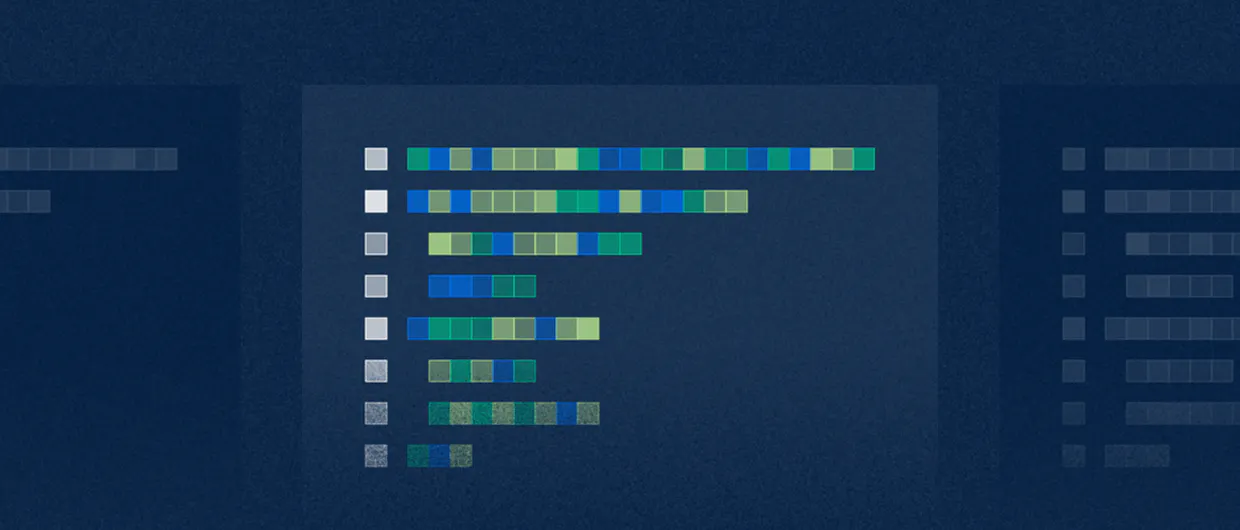
Algorithm synthesis begins with a program written in a conventional programming language. It doesn’t require quantum-specific functions or libraries.
2. Refactoring, simplification, and classification
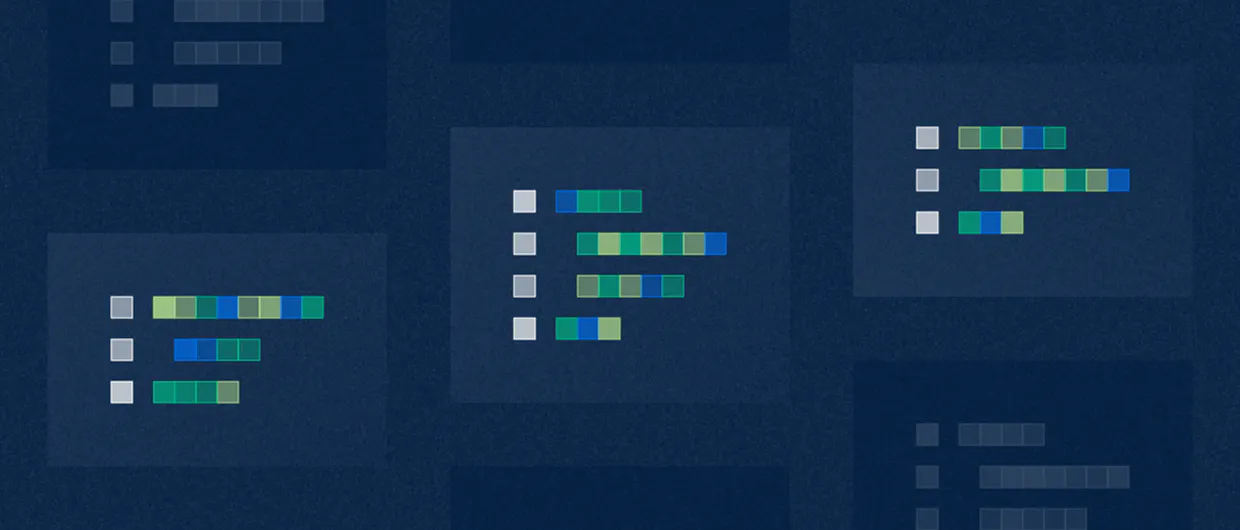
Triple Alpha’s compiler then refactors this classical code into a fixed set of algorithmic building blocks, breaking loops and recursive function calls down into progressively simpler components.
3. Quantum algorithm construction
With the code reduced to its most basic form, a finite number of distinct patterns emerge. These patterns are identified as primitives—essentially, building blocks—that together represent the full structure of the program. Each primitive is then replaced with a purpose-built quantum or classical algorithm that accomplishes the same task but with better performance. In other words, it swaps out these classical building blocks for implementations that take advantage of quantum processing.